Find vintage italian dining table for Hotels, Homes, Restaurants
Source 30 listings for the vintage italian dining table with options in wood, metal, and sintered stone. Compare customizable sizes, modern and antique styles, and delivery times ranging from 30 to 60 days for dining rooms and hotels.
Key considerations
Products List


Luxury Long Dining Table Classic Italian High Gloss Wood 8 Seater Dining Table
$2000.00 - $20000.00
Moq: 1


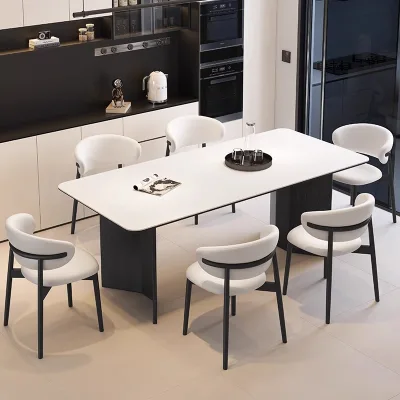


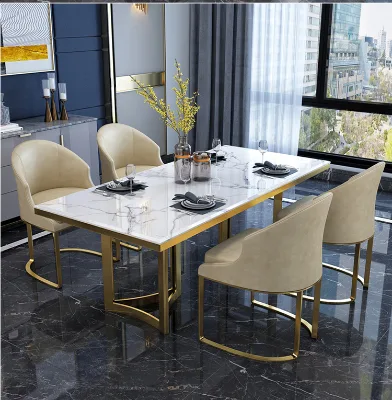
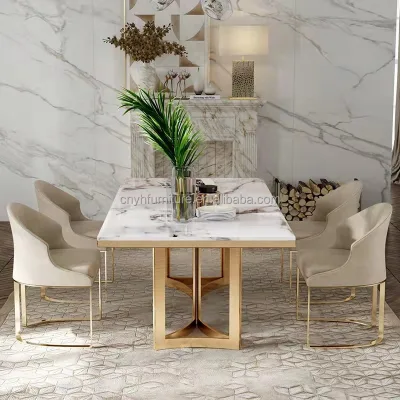
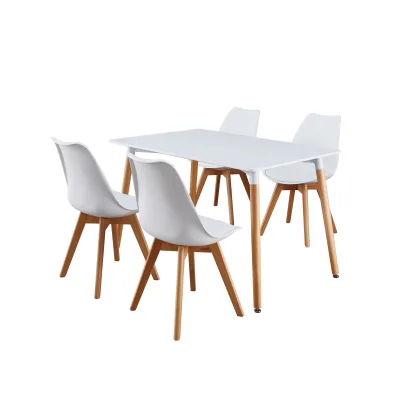


Comprehensive Sourcing Guide
Strategic Sourcing Guide for Vintage Italian Dining Table Procurement
Sourcing a vintage Italian dining table requires a nuanced approach that balances aesthetic heritage with modern supply chain realities. While the term "vintage Italian dining table" evokes images of handcrafted antiques from specific European regions, the current global market often presents these items through manufacturers in China who replicate the style or offer custom fabrication. Buyers must navigate the distinction between genuine antique acquisition and the procurement of new furniture designed to emulate the vintage Italian aesthetic. This guide provides a disciplined framework for evaluating suppliers, verifying specifications, and ensuring quality compliance when sourcing dining tables that align with the "vintage Italian" style profile, utilizing the available market data to inform decision-making.
Defining Style and Aesthetic Specifications
The primary challenge in sourcing a "vintage Italian dining table" lies in defining the specific stylistic parameters required. The market data indicates a diverse range of styles available, including "Modern," "Antique," and "Stylish" configurations. A buyer seeking a vintage Italian look must carefully scrutinize the "Style" attribute, as the supply chain offers both contemporary modern designs and antique reproductions. The "Shape" attribute is equally critical, with available options ranging from "Rectangle" to "Round," both of which are staples in Italian dining design.
When evaluating product listings, the "Color" plays a significant role in establishing the vintage character. Observed data lists "Brown" and "Grey" as available color options. A traditional vintage Italian table often features rich wood tones, suggesting a preference for the "Brown" finish, though modern interpretations may utilize grey tones. The "Material" attribute is a fundamental differentiator; the supply chain offers "Wood," "Wooden," and "Metal" options. Authentic vintage Italian tables typically prioritize solid wood, but the market also provides tables with "Metal" legs, such as "1.2mm Thickness Metal Powder Coated Leg and Frame," which can be used to create a hybrid vintage-industrial aesthetic.
Buyers should verify the "Table Top" material, as options include "Sintered Stone," "Marble," or "Wood." Marble tops are a hallmark of Italian design, offering a luxurious feel that complements the vintage aesthetic. The "Rotary" attribute is noted as "Fixed," indicating that the tables in this specific dataset are not extendable, which is a crucial specification for buyers requiring specific seating capacities. Furthermore, the "Folded" status is listed as "Unfolded," confirming that these are permanent dining structures rather than collapsible units.
Technical Dimensions and Customization Capabilities
Dimensional accuracy is paramount for dining tables, as they must fit specific room layouts and accommodate varying numbers of guests. The provided data reveals significant variability in product standards and sizes. For instance, one model specification lists dimensions of "45001200800mm," while another specifies "22001100780 mm." A third entry details a range of "13501350780mm" and "15001500780mm." These figures highlight that "Customizable" is a key attribute for size, allowing buyers to request dimensions that match their specific space requirements.
The "Customization" attribute is explicitly marked as "Available," and the "Whether to Bring a Chair" option is also "Customizable." This flexibility is essential for creating a cohesive dining set that matches the vintage Italian style. Buyers should utilize the "prod_packing" and "prod_standard" fields to ensure that the packaging supports the delivery of large, fragile items like marble or wood tops. The data suggests options for "Standard Packaging or Customized" and "Carton with Wood Frame," which are necessary to protect high-value surfaces during international transit.
When reviewing model numbers such as "EK-JB-DT001," "DZ-TN-031," or "FT-133," buyers must cross-reference these with the specific dimensional standards provided. The "prod_standard" field sometimes lists dimensions directly, while other times it refers to packaging standards. It is vital to confirm whether the listed dimensions refer to the table top, the overall footprint, or the height, as inconsistencies in this data can lead to procurement errors. The "Size" attribute being "Customizable" offers a safety net, but the buyer must provide precise requirements to the supplier to avoid receiving a table that does not fit the intended dining room.
Compliance, Certification, and Quality Assurance
In the B2B procurement of furniture, especially items marketed with high-end aesthetic descriptors like "vintage Italian," compliance and certification are non-negotiable. The supply chain data indicates that suppliers may hold certifications such as "TUV," "SGS," and "ISO9001." These certifications are critical indicators of a manufacturer's commitment to quality management and product safety. "TUV" certification often relates to product safety and quality testing, while "ISO9001" signifies adherence to international quality management standards.
The "Quality" attribute is described as "High Quality," but this is a subjective claim that must be substantiated by objective evidence. Buyers should request test reports or specific compliance documents that align with the "Certificate" attributes mentioned. The "Warranty" period varies in the data, with options for "5years" and "3 Years." A longer warranty period often correlates with higher confidence in the durability of the materials and construction. For a vintage-style table, which may involve heavy materials like marble or solid wood, a robust warranty is essential to protect against defects in the stone or wood grain.
The "Aftersale-Service" is listed as "Yes," which is a positive indicator for long-term support. However, buyers must clarify the scope of this service. Does it cover structural repairs, finish touch-ups, or replacement of damaged components? The "Export Years" attribute mentions "15 Years" of experience, suggesting that the supplier has a history of handling international logistics and quality expectations. This experience is particularly relevant for sourcing furniture that requires careful handling to maintain its aesthetic integrity.
Cost Drivers and Financial Terms
Understanding the cost structure of vintage Italian dining tables is complex due to the variability in materials and customization. The observed price range in the market spans from "0.28" to "20000" USD, indicating a vast disparity between basic models and high-end, fully customized pieces. This range suggests that the "Material" and "Table Top" choice are the primary cost drivers. A table with a "Sintered Stone" or "Marble" top will naturally command a higher price than one with a standard wood top.
The "MOQ" (Minimum Order Quantity) ranges from "1 Piece" to "1000," offering flexibility for different buyer profiles. A single-piece order might be suitable for a boutique hotel or a private collector, while a bulk order for a restaurant chain would require negotiating volume discounts. The "Payment Term" options include "T/T," "Paypal," "L/C," and "D/P." For high-value transactions, such as a large order of marble-topped tables, "L/C" (Letter of Credit) provides security for both parties, whereas "T/T" (Telegraphic Transfer) is common for established relationships.
Lead times are another significant cost factor. The data shows delivery times ranging from "30-45 days" to "45-60 days." These timelines must be factored into the overall project schedule, especially for commercial projects like hotels or restaurants where opening dates are fixed. The "Business Type" is listed as "Factory," which implies a direct manufacturing relationship, potentially reducing costs compared to trading companies. However, buyers should verify if the factory handles the entire production process or outsources specific components like metal leg fabrication.
Supplier Evaluation and Operational Verification
Evaluating a supplier for vintage Italian dining tables requires a deep dive into their operational capabilities and business history. The data identifies the "Business Type" as "Factory" and the "Factory" description as "Manufacture, Wholesale, High Quality Factory." This suggests a direct source, but buyers must verify the factory's actual capacity to produce "Antique" or "Vintage" style items. The "Style" attribute lists both "Modern" and "Antique," indicating that the supplier may have diverse production lines.
The "Location" is specified as "China," which is a major hub for furniture manufacturing. While this offers competitive pricing, it requires rigorous quality control to ensure the final product meets the "vintage Italian" aesthetic standards. Buyers should assess the supplier's "Export Years" and "90% Export Business" claim to gauge their experience with international clients. A supplier with a high export ratio is likely more familiar with the documentation, packaging, and logistics required for shipping to Europe or North America.
The "Product Name" in the data includes "Office Table Frame and Leg," which highlights that some suppliers may specialize in components rather than finished tables. Buyers must ensure they are dealing with a supplier capable of delivering the complete "Dining Table" unit, including the top, legs, and any necessary hardware. The "Function" is listed as "Dining Table Set," suggesting that the supplier can provide coordinated sets, which is beneficial for commercial projects requiring uniformity.
Quality Control and Long-Term Procurement Strategy
Implementing a robust quality control (QC) strategy is essential when sourcing furniture with high aesthetic and material value. The "Quality" attribute is listed as "High Quality," but this must be validated through pre-shipment inspections. Buyers should focus on the integrity of the "Table Top" material, checking for cracks in the marble or stone and ensuring the wood grain is consistent and free of defects. The "Leg" construction, described as "1.2mm Thickness Metal Powder Coated Leg and Frame," requires inspection for coating uniformity and structural stability.
The "prod_packing" attribute, which includes "All-Inclusive Wooden Frame" and "Carton with Wood Frame," is a critical component of QC. Packaging must be sufficient to prevent damage during the 30-60 day delivery window. Buyers should request photos of the packaging process to ensure that corners and edges are protected, especially for marble tops which are prone to chipping. The "Standard Packaging or Customized" option allows for tailored solutions, but the buyer must specify the exact requirements to avoid standard packaging that may be insufficient for delicate items.
Long-term procurement considerations involve building a relationship with a supplier who can maintain consistency over time. The "Warranty" periods of 3 to 5 years provide a baseline for product longevity, but buyers should also consider the availability of replacement parts. The "Customization" capability ensures that future orders can match the original aesthetic, which is vital for maintaining a consistent look in a hotel or restaurant chain. The "Aftersale-Service" confirmation suggests that the supplier is willing to address issues post-delivery, but the specific terms should be clearly defined in the contract.
Comparative Analysis of Product Attributes
To facilitate decision-making, the following table summarizes key attributes observed in the market data for vintage Italian dining table procurement. This comparison highlights the variability in specifications and helps buyers identify the most suitable options for their specific needs.
| Attribute | Option A (Wood Focus) | Option B (Metal/Stone Focus) | Option C (Custom/High-End) |
|---|---|---|---|
| Material | Wood / Wooden | Metal / Sintered Stone | Mixed (Wood + Metal) |
| Shape | Rectangle | Round | Customizable |
| Style | Antique | Modern / Commercial | Modern / Antique |
| Color | Brown | Grey | Customizable |
| Top Material | Wood | Sintered Stone / Marble | Customizable |
| Leg Type | Fixed Wood | 1.2mm Powder Coated Metal | Customizable |
| Warranty | 5 Years | 3 Years | Customizable |
| Certification | TUV | SGS, ISO9001 | TUV, SGS |
| Delivery Time | 30-45 Days | 45-60 Days | 30-60 Days |
| MOQ | 1 Piece | 1 Piece | Customizable |
This table illustrates that while the core keyword "vintage Italian dining table" suggests a specific aesthetic, the market offers a wide spectrum of interpretations. Buyers must align their specific requirements with the available attributes, ensuring that the chosen product meets both the visual and functional demands of the project. By rigorously applying the verification steps outlined in this guide, buyers can mitigate risks and secure high-quality dining tables that stand the test of time.
FAQs
Can I customize the size and chair inclusion for vintage Italian dining tables?
Yes, size and chair inclusion are customizable for these dining tables. The product attributes confirm that size is customizable and whether to bring a chair is also customizable. Buyers can request specific dimensions to fit their dining room layout while ensuring the table style matches their vintage Italian aesthetic requirements.
What certifications do vintage Italian dining table manufacturers hold?
Manufacturers often hold TUV, SGS, and ISO9001 certifications for their products. These certifications indicate adherence to international quality management standards and product safety. Buyers should verify these specific documents to ensure the high-quality claims for wood, metal, or stone materials are substantiated by objective compliance evidence.
How long is the delivery time for custom vintage Italian dining tables?
Delivery times typically range from 30 to 60 days depending on the specific order. Some listings show 30-45 days while others indicate 45-60 days for completion. This lead time must be factored into project schedules for hotels or restaurants to ensure timely installation and opening.
Which materials are used for the table tops and legs of these tables?
Table tops can be made of sintered stone, marble, or wood, while legs are often 1.2mm thickness metal powder coated. The main body material is frequently wood or wooden, with some models featuring metal frames. This combination allows for a hybrid vintage-industrial aesthetic suitable for various dining room styles.
What is the minimum order quantity for sourcing vintage Italian dining tables?
The minimum order quantity can be as low as one piece for certain models. However, the observed MOQ range extends up to 1000 pieces depending on the supplier and customization level. This flexibility allows both boutique buyers and large commercial chains to source tables according to their specific volume needs.
Can buyers request specific packaging for fragile vintage Italian dining table tops?
Yes, packaging can be standard or customized to include a wooden frame. Options include standard packaging or an all-inclusive wooden frame to protect marble and stone tops during transit. Buyers should specify these requirements to ensure the high-value surfaces arrive without chipping or damage.
What warranty periods are available for vintage Italian dining table purchases?
Warranty periods vary between 3 years and 5 years for different product models. A longer warranty often correlates with higher confidence in the durability of materials like solid wood or marble. Buyers should clarify the scope of aftersale service to ensure coverage for structural repairs or finish touch-ups.